Memory
A mind that remembers.
The library is what the office has. Memory is how it finds things and remembers what matters.
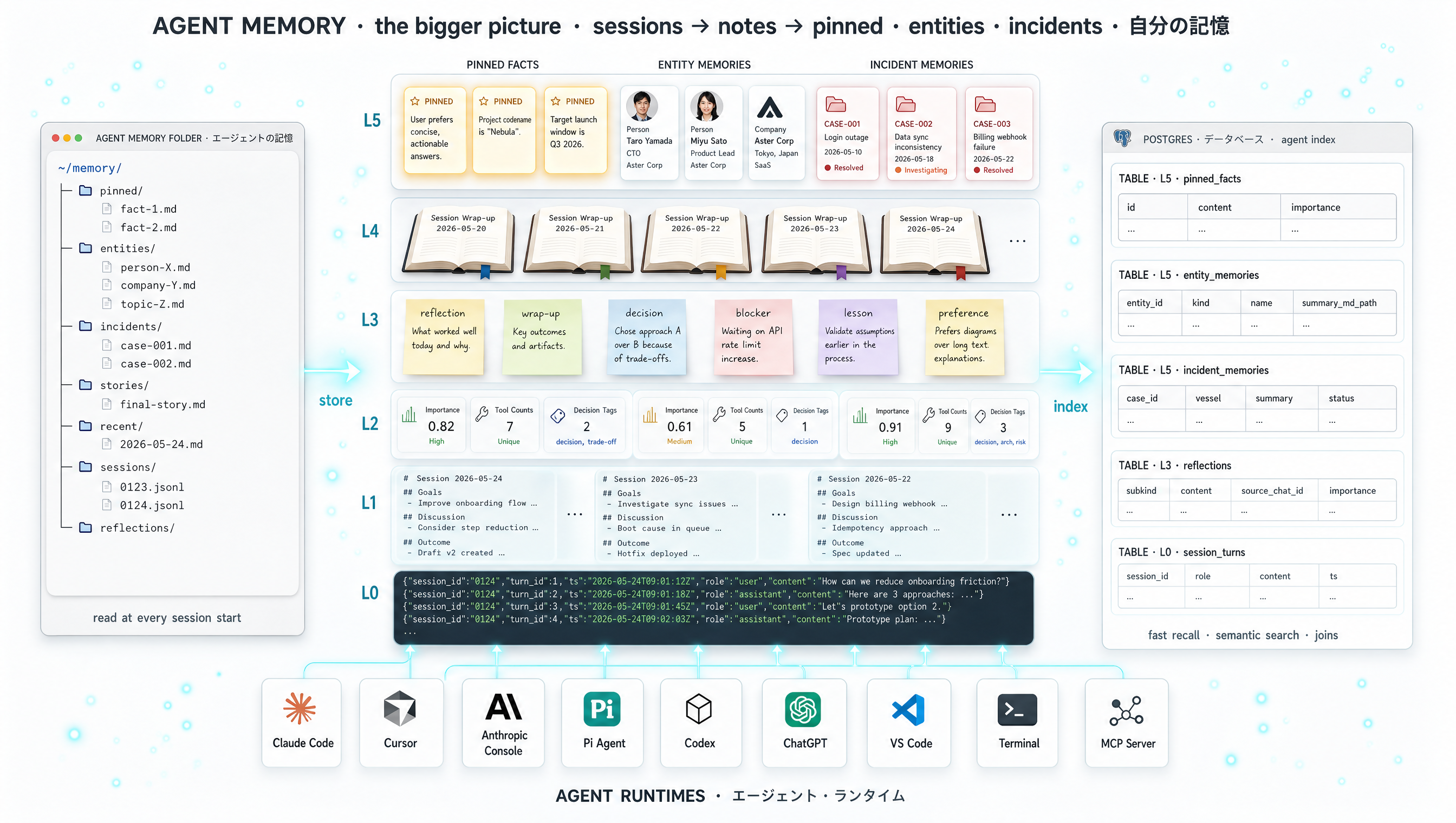
At the top level, memory knows where everything is. Below that, memory knows what’s inside each folder. Below that, memory knows the stories — the threads of meaning that connect a hundred files. A story might say “this customer has been unhappy for three months across these eight emails.” That story has to be findable. It also has to be matchable against new data as it arrives. When a new email lands, memory asks: “does this connect to a story I already know?” Today memory is a combination of vector search (for fuzzy matching) and filesystem index (for exact retrieval). The big unsolved problem is how memory should be structured when an office has been running for years.
How memory is built
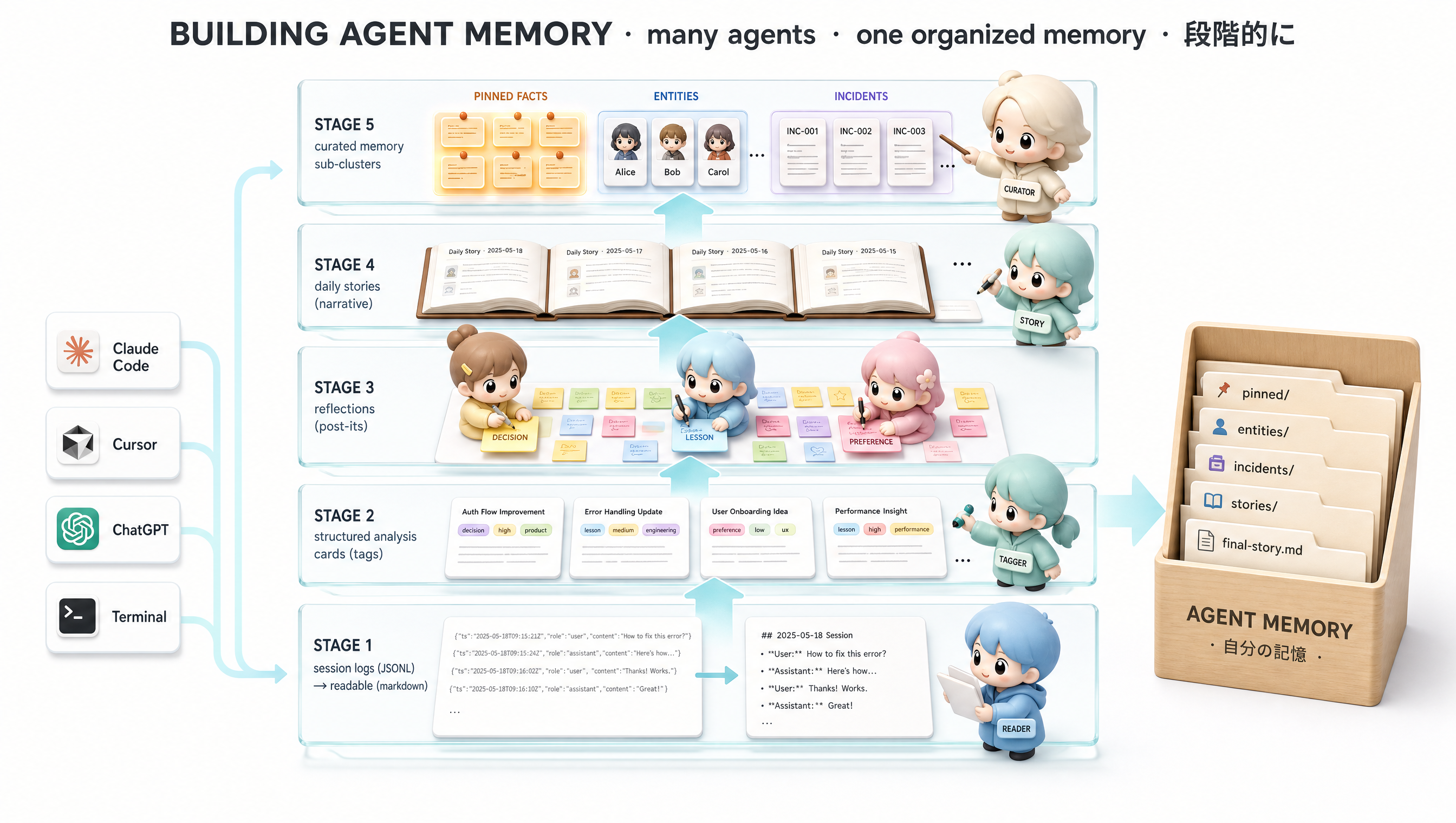
Memory grows from notes taken during work. Notes cluster into stories. Stories cluster into one final story — the cold-start brief the agent reads on its way in every morning.
Vendors we track
Going deeper
🚧 Sub-pages are coming online. For the complete six-layer picture, see the six-layers overview.